
Payroll Processing in Kenya is simplified with Wagemaster, helping businesses calculate payroll, track deductions, generate payslips, statutory returns, reports and bank transfer files.
What Is Payroll Processing?
Payroll Processing is the structured process of collecting employee pay information, calculating earnings and deductions, reviewing payroll results, preparing employee records and completing the activities required to pay employees and manage related payroll obligations.
A proper payroll process usually begins before any salary is calculated.
Employee information has to be correct.
The payroll period needs to be clear.
Changes affecting pay must be captured.
Earnings need to be entered correctly.
Deductions need to be reviewed.
Statutory obligations must be considered.
Only then can the payroll team confidently move toward the final calculation.
That distinction matters.
A business can have perfectly designed formulas and still produce incorrect payroll if the information going into those formulas is wrong.
So, before talking about tax calculations or payslips, let’s start where good payroll actually begins.
2.Preparing Accurate Employee Information Before Payroll Processing
Before a payroll system calculates anything, it needs reliable information.
A payroll professional needs confidence that the employee information being used for the payroll period reflects reality.
That means checking relevant changes before processing begins.
For example, payroll teams may need to confirm:
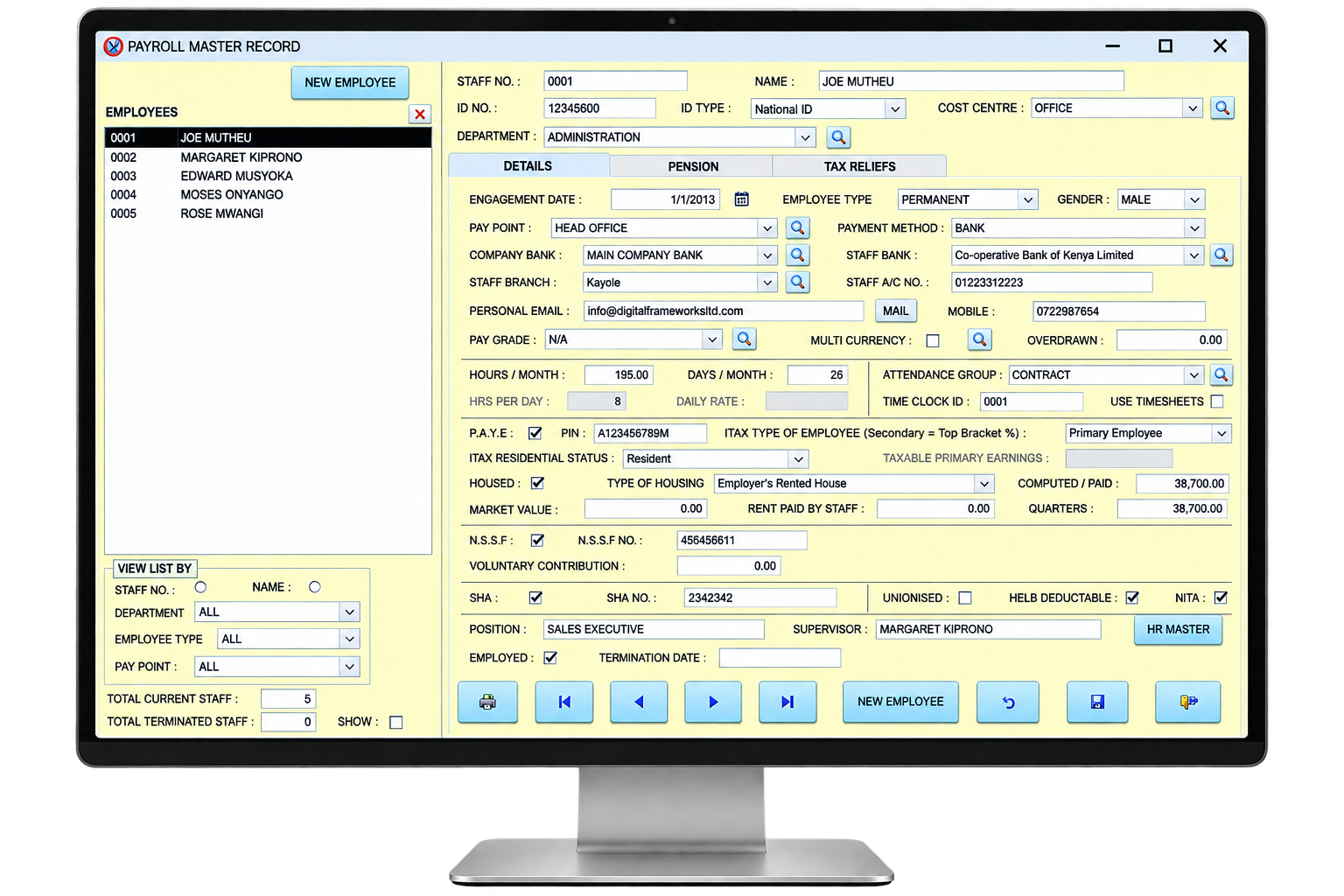
Employee Information to Review Before Payroll✓ New employees who should be included ✓ Employees leaving the organisation ✓ Salary adjustments ✓ Allowances and other earnings ✓ Overtime or approved additional hours ✓ Changes to deductions ✓ Employee payment information ✓ Relevant attendance or timesheet information |
 |
As a business grows, keeping this information updated manually becomes harder.
One spreadsheet may contain salaries.
Another tracks overtime.
A third contains employee deductions.
Someone updates one file but forgets another.
This is where integrated workforce tools become useful.
Wagemaster Payroll & HR Software can support the management of employee information alongside the wider workforce process, while payroll information can be handled within the Wagemaster payroll environment.
Once the relevant employee earnings have been captured and reviewed, payroll needs to determine what each employee should receive for the period.
Different employees may have different earning arrangements.
Some receive allowances.
Others earn overtime.
Some businesses process project-based earnings or timesheets.
Casual employees may be paid differently from permanent employees.
A company may even manage both weekly and monthly payroll arrangements.
Each of these situations adds information that needs to be handled correctly.
dedicated payroll system can help businesses create a more structured approach.
Wagemaster Payroll Software supports payroll calculations based on employee earnings while helping organisations manage tax calculations and payroll deductions within the wider payroll workflow.
It also supports different employee categories and payroll arrangements, including permanent and casual employees and monthly and weekly payroll processing.
3. Managing PAYE During Payroll Processing in Kenya
A payroll calculation doesn’t stop at gross earnings.
Kenyan employers also have statutory payroll responsibilities, and PAYE is one of the most important.
PAYE—Pay As You Earn—is the system through which employers deduct income tax from employees’ taxable employment income at the applicable rates.
According to the Kenya Revenue Authority PAYE guidance, employers are required to deduct PAYE from employees’ emoluments at the prevailing individual income tax rates.
KRA states that PAYE returns should be filed through iTax and that both filing and remittance are due on or before the 9th day of the following month
One of the biggest mistakes businesses can make is thinking about payroll like this:
Basic salary − deductions = net pay.
The payroll picture can be broader.
KRA explains that taxable employment income may include items such as wages, salary, leave pay, commissions, bonuses and certain allowances or benefits, depending on the circumstances and applicable tax treatment.
That creates an important payroll lesson.
Statutory calculations depend on accurate payroll data.
If relevant earnings are missing or incorrectly captured, the payroll result may be affected.
This is why payroll teams should review employee earnings before finalising calculations rather than relying blindly on the system to identify missing information.
Wagemaster supports real-time tax calculations as part of its payroll functionality, helping businesses bring payroll calculations into a more structured workflow.
4. Managing NSSF Contributions During Payroll Processing
NSSF is another important part of the Kenyan payroll environment.
Employers need to remain aware of applicable NSSF contribution requirements and changes affecting payroll configuration.
The National Social Security Fund published a Year 4 (2026) NSSF Contribution Rates notice in February 2026, demonstrating that employers and payroll teams need to keep their payroll configurations current rather than continuing to rely on historical settings.
A good Payroll Processing workflow should include a process for reviewing statutory changes when they occur.
This is one reason dedicated payroll systems can become increasingly valuable as a business grows.
Rather than managing statutory calculations through multiple manually maintained formulas, organisations can work within a structured payroll environment while ensuring their statutory configurations are reviewed and maintained appropriately.
Wagemaster includes support for statutory payroll reporting relevant to Kenyan businesses, including NSSF-related payroll requirements
5. Managing Social Health Insurance Contributions
Kenyan payroll teams also need to consider obligations connected to the Social Health Insurance Fund (SHIF) and the Social Health Authority.
Employers are expected to manage employee contribution information accurately and submit contributions within the applicable timelines.
A SHA public notice reminds employers of their obligations regarding timely remittance and states that employee contributions should be deducted and submitted by the 9th of each month, in line with the referenced regulations. The notice also warns that late remittance may attract penalties.
The SHA Employer Portal also emphasises that employers are responsible for timely and accurate contributions in accordance with rates and deadlines specified by SHA.
Because statutory contribution requirements can change, businesses should always verify current rates and obligations using official sources before relying on a payroll configuration.
That principle applies across the entire payroll process.
Don’t build compliance around assumptions.
Build it around current information.
6. Affordable Housing Levy and Payroll Processing
The Affordable Housing Levy is another statutory consideration that Kenyan employers need to account for during payroll.
KRA’s current PAYE guidance states that the employee and employer each contribute 1.5% of the employee’s gross monthly salary, with the combined amount remitted within nine working days after the end of the relevant month.
The employer’s payroll responsibility therefore goes beyond simply deducting the employee’s contribution.
The employer also has a corresponding contribution obligation.
From a payroll management perspective, this shows why statutory deductions need to be treated as part of the wider payroll workflow.
The business needs to know:
What earnings form the basis of the calculation?
Has the employee information been captured correctly?
Have the relevant statutory amounts been calculated?
Are the employer obligations also being considered?
Is the information ready for the required reporting and remittance process?
When statutory payroll obligations are managed through disconnected spreadsheets, these questions become harder to control.
A structured payroll process makes the workflow easier to review.
7. Reviewing Employee Deductions Before Finalising Payroll
Not every business has the same compensation structure.
Organisations may create different earnings and deductions based on their employment arrangements and internal policies.
A payroll system needs enough flexibility to accommodate this reality.
Wagemaster Payroll Software allows organisations to define company-specific earnings and deductions, helping businesses structure payroll around their own compensation arrangements.
But there’s still a critical control before payroll is completed.
Review.
A payroll system can calculate based on the information it has.
It can’t know that someone entered the wrong information unless that issue is identified through proper controls and review.
Automation improves efficiency.
Human review protects accuracy.
For employers in Kenya, good payroll management isn’t simply about calculating how much money employees should receive. The entire process needs to be organised. Employee information has to be accurate. Earnings must be captured correctly. Deductions need to be tracked. The payroll figures should be reviewed before payment, and the business must be able to generate the records and reports it needs.
How Wagemaster Supports Payroll Processing in Kenya
Wagemaster is designed to support businesses through the wider Payroll Processing .
The system supports complete payroll computation from employee earnings, helping organisations manage the information that forms the starting point of every payroll run.
Businesses can define and manage employee earnings and deductions based on their payroll requirements. The system supports automatic payroll calculations and deduction tracking, reducing the amount of repetitive manual calculation required during each payroll cycle.
Wagemaster also supports different employee categories and payroll arrangements, making it suitable for organisations managing permanent and casual employees as well as different payroll frequencies.
Once payroll has been processed, the work doesn’t stop.
Wagemaster can generate employee payslips, provide management reports and support statutory payroll reporting. This means payroll teams can work with the information generated during the payroll process instead of manually rebuilding reports from scratch after every payroll run.
And then comes payment preparation.
Wagemaster produces bank transfer files that can be uploaded to compatible banking software, helping businesses move from payroll calculation towards salary payment preparation more efficiently.
That creates a more connected workflow:
Employee earnings → payroll calculations → deductions → payroll review → payslips and reports → payment preparation.
Instead of managing each stage in a separate spreadsheet or system, businesses can handle the core stages of Payroll Processing through one structured solution.
Wagemaster extends beyond payroll through its HR and Time Attendance solutions.
Employee information can be managed through Wagemaster HR Software, helping organisations maintain workforce records that support wider HR and payroll processes.
For organisations where working hours and attendance affect employee pay, Wagemaster Time Attendance can capture and analyse employee clocking information. Summarised hours can then be posted to Wagemaster Payroll, reducing the need to manually transfer attendance information between separate systems.
This creates something payroll professionals value enormously.
Continuity of information.
The same business doesn’t have to keep recreating employee and workforce information in multiple places.
Payroll Software Doesn’t Replace Payroll Expertise
There is one thing worth making clear.
Payroll software doesn’t replace the payroll professional.
It supports them.
Software can perform calculations quickly. It can apply configured rules consistently. It can generate payslips and reports in seconds.
But someone still needs to make sure the information entering the system is correct.
Someone needs to review employee changes.
Someone needs to investigate unusual figures.
Someone needs to ensure the organisation is following the correct payroll procedures.
Technology makes the repetitive work easier.
Payroll expertise provides the judgement.
The strongest Payroll Processing environment combines both.
A knowledgeable payroll professional supported by software designed to handle the complexity of modern payroll.
Moving From Manual Payroll to a Structured Payroll Process
For many businesses, moving away from Excel doesn’t have to happen overnight.
The transition usually begins when the organisation recognises that the existing process is taking too much time or creating too much risk.
Perhaps payroll calculations require excessive manual checking.
Maybe different departments are working from different spreadsheets.
Perhaps generating payslips and reports takes longer than it should.
Or the business has simply grown beyond the process that worked when there were only a handful of employees.
Those are signs that the organisation may benefit from dedicated payroll software.
Wagemaster provides Kenyan businesses with a structured way to manage payroll calculations, deductions, payslips, reporting and payment preparation.
Why Wagemaster Is Built for Growing Businesses
Wagemaster provides businesses with solutions for managing key workforce processes.
Depending on business requirements, organisations can manage:
Payroll
- Employee payroll processing
- Earnings and deductions
- Payslips
- Statutory reporting
- Payroll analysis
- Bank payment processing
HR Management
- Employee records
- Workforce information
- HR administration
- Employee management
Time Attendance
- Employee clocking
- Work hours
- Shift management
- Attendance analysis
- Payroll integration
By connecting these processes, businesses can reduce manual administration and create a more efficient way to manage their workforce.
Why Payroll Reports Are Important
Payroll teams and business managers often need to see more than individual employee payslips.
They need a wider view of the payroll.
Reports can help organisations review employee earnings, deductions and payroll information before moving to payment.
Wagemaster includes management reporting and custom reporting capabilities, giving businesses tools to review payroll information based on their operational requirements.
Good Payroll Processing doesn’t mean calculating everything and immediately clicking “complete.”
Generating Employee Payslips and Maintaining Payroll Records
For employees, the payslip is usually the most visible part of the payroll process.
It provides a record of earnings, deductions and the amount payable.
For the employee, it answers a simple question:
How was my pay calculated?
For the payroll team, generating payslips is part of a much larger record-management responsibility.
Preparing payroll documents manually becomes increasingly repetitive as the workforce grows.
Wagemaster Payroll Software supports the generation and distribution of employee payslips and can support the direct emailing of payroll documents, including payslips and P9 forms.
That reduces repetitive administrative work while helping businesses maintain a more organised payroll process.
Payroll records also support statutory reporting and internal review.
KRA requires employers to compile relevant employee PAYE information and submit returns through iTax.
Preparing Salary Payments With Bank Transfer Files
The payroll isn’t finished when net pay has been calculated.
Employees still need to receive their salaries.
For organisations paying employees through banks, manually preparing individual payment instructions can create another repetitive stage in the process.
Amounts need to be correct.
Payment details need to be correct.
The final payment information needs to match the approved payroll.
One mistake can create an uncomfortable payday conversation.
Wagemaster Payroll Software generates bank transfer reports and export files that can support the preparation of salary payments through compatible banking systems.
What Should You Look for in Payroll Software in Kenya?
If your organisation is considering Payroll Software in Kenya, don’t start by asking only one question:
How much does it cost?
Price matters.
But payroll software affects a critical business process.
You should also consider whether the system can handle your actual payroll requirements.
Can you define your own earnings and deductions?
Does it support your employee categories?
Can it handle weekly and monthly payroll?
How easy is it to review payroll reports?
Can it generate employee payslips?
Does it support statutory payroll workflows relevant to Kenyan employers?
Can you prepare bank payment files?
Can the system grow as the workforce grows?
And perhaps most importantly:
How easily can your payroll team control and review the process?
Wagemaster positions itself as a comprehensive payroll solution for Kenyan businesses, with payroll, HR and time attendance capabilities designed to support organisations as their workforce requirements grow.
Its one-off licence purchase model is also relevant for businesses that prefer to avoid recurring monthly or yearly software commitments, subject to the organisation selecting the appropriate product and configuration for its needs.
Wagemaster Payroll Software helps businesses bring payroll calculations, deductions, reporting, payslips and payment preparation into a more organised environment, while Wagemaster HR and Time Attendance solutions can support the wider workforce information that influences payroll.
The objective isn’t simply faster payroll.
It’s better control.
